
May 13, 2026 By Bigcats Comments are Off geological activity, Kopjes, rocks, Serengeti, Tanzania, wildlife
Serengeti Kopjes Explained reveals how these ancient granite rock formations shape the landscape, wildlife behavior, and iconic safari scenery across Tanzania’s most famous national park.
The Serengeti attracts travelers with endless grasslands, dramatic wildlife encounters, and the unforgettable spectacle of the Great Migration. However, another feature quietly defines the landscape just as much as the animals themselves. Massive granite rock formations rise from the plains like natural islands scattered across the savannah. These ancient formations, known as kopjes, create some of the most iconic scenery in Tanzania’s most famous national park.
Although many visitors focus on wildlife alone, the kopjes reveal an entirely different side of the Serengeti. They influence predator behavior, support smaller ecosystems, and add striking beauty to the open plains. Moreover, they carry a deep geological and cultural history that stretches back millions of years.
Serengeti Kopjes Explained: What Are the Kopjes?
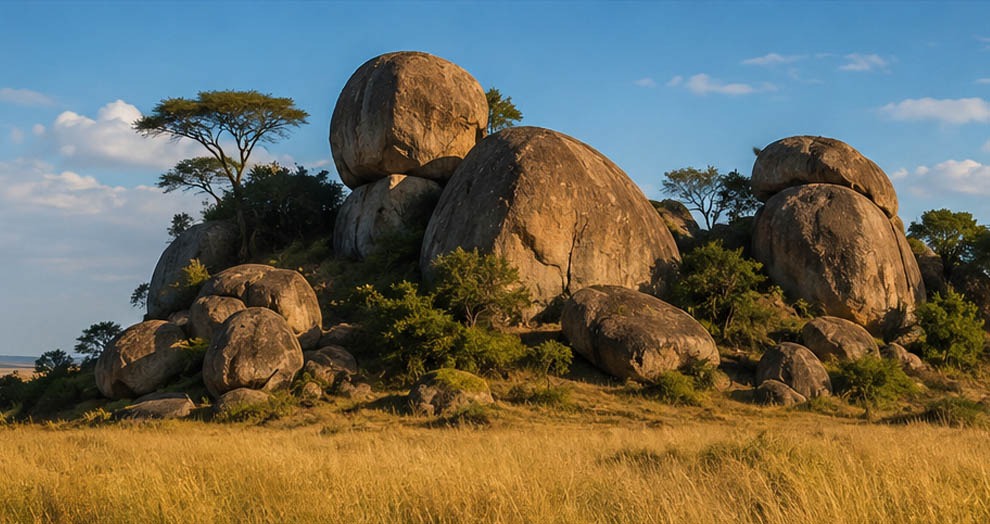
Kopjes are ancient granite outcrops that rise naturally above the flat Serengeti plains. Over millions of years, geological activity pushed these rocks upward while wind, rain, and erosion slowly shaped them into the formations visible today.
Some kopjes resemble towering stone castles, while others appear as carefully balanced piles of giant boulders. As a result, they create dramatic contrast against the endless grasslands surrounding them. Their unusual appearance immediately captures attention and gives the Serengeti much of its distinctive visual identity.
Unlike the constantly moving wildlife herds, kopjes remain timeless and still. Consequently, they provide a sense of permanence within an ecosystem known for movement and migration.
Why Kopjes Play an Important Role in the Serengeti Ecosystem
Beyond their visual beauty, kopjes support a wide range of wildlife across the Serengeti. These rocky formations create shade, shelter, and elevated viewpoints that many animals rely upon every day.
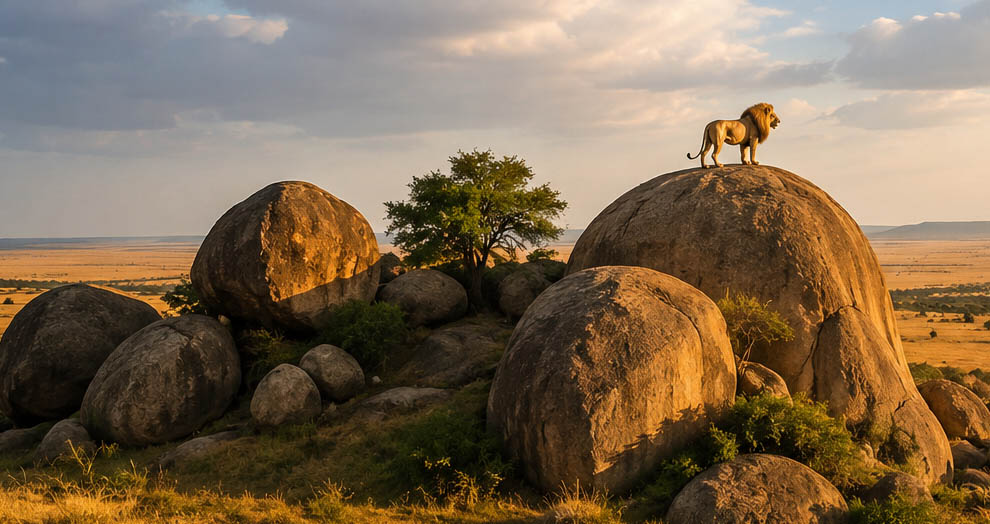
Lions frequently rest on top of kopjes because the high vantage points allow them to observe prey across the plains. In addition, the sun-warmed rocks provide comfortable resting places throughout the day. Safari travelers often spot entire prides stretched across the stone surfaces while scanning the surrounding grasslands.
Leopards also use kopjes for protection and concealment. Meanwhile, smaller species such as hyraxes, lizards, snakes, and birds find safety within narrow rock crevices and hidden gaps between boulders.
Therefore, each kopje functions almost like a small isolated ecosystem within the larger Serengeti environment.
Serengeti Kopjes Explained: The Most Iconic Safari Landscapes in Tanzania
Many of the Serengeti’s most famous safari photographs feature kopjes in the background. A lion standing against the horizon, a cheetah scanning the plains from elevated rocks, or golden sunset light reflecting off ancient stone all create unforgettable safari imagery.
Because the Serengeti plains remain relatively flat, kopjes add depth and drama to the scenery. Furthermore, they help photographers create powerful compositions that capture the scale and beauty of East Africa.
As daylight changes throughout the day, the granite formations also transform in appearance. Morning light softens the rocks, while sunset often creates glowing orange and gold tones across the stone surfaces. Consequently, kopjes contribute not only to wildlife viewing but also to the overall atmosphere of the Serengeti experience.
The History and Cultural Importance of Kopjes
For centuries, local communities viewed kopjes as places of shelter, storytelling, and spiritual importance. Their isolated appearance across the plains naturally inspired mystery and cultural significance.
Even today, many travelers describe a unique feeling when standing near these formations. The silence, ancient stone, and open surroundings create an atmosphere that feels untouched by time. Unlike busy safari sightings filled with movement, kopjes offer moments of stillness and reflection.
Because of this contrast, they represent an essential part of the Serengeti’s identity rather than simply geological features.
Our Great Migration Safari programs


Serengeti Kopjes Explained: Discovering the park Beyond Wildlife
The Serengeti offers much more than animal sightings alone. Landscapes such as the kopjes shape the ecosystem, influence predator behavior, and create some of Africa’s most memorable safari scenery.
Understanding these ancient formations helps travelers experience the Serengeti on a deeper level. Instead of seeing only grasslands and wildlife, visitors begin to notice the relationship between geology, animals, and the environment itself.
Ultimately, the kopjes remind us that the Serengeti is not only a place of migration and movement. It is also a landscape shaped by millions of years of natural history that continues to inspire wonder today.