Great Wildebeest Migration Safaris
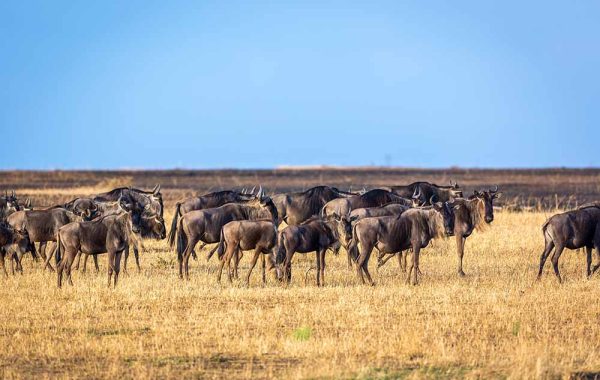
Choosing the Great Wildebeest Migration Safaris in Tanzania offers one of nature’s most profound spectacles. Every year, over two million wildebeest, zebras, and gazelles traverse the vast Serengeti ecosystem in a relentless search for green pastures and water. Because this journey follows a circular route dictated by rainfall, travelers can witness different stages of the migration depending on the time of year.
The Calving Season (January – March) – Great Wildebeest Migration Safaris
The journey begins in the southern Serengeti and the Ngorongoro Conservation Area. During these months, the herds settle on the nutrient-rich short-grass plains to give birth. Remarkably, the wildebeest synchronize their birthing process, producing roughly 8,000 calves every single day. Consequently, predators like lions, cheetahs, and hyenas congregate in high numbers, creating intense wildlife encounters for safari-goers.
The Trek North (April – June)
As the southern plains dry out, the herds move toward the Western Corridor. They follow the clouds, seeking the fresh grass that follows the rains. During this transition, the columns of animals stretch for miles, creating a truly massive scale of movement. Eventually, the animals reach the Grumeti River, where they face their first major water obstacle.
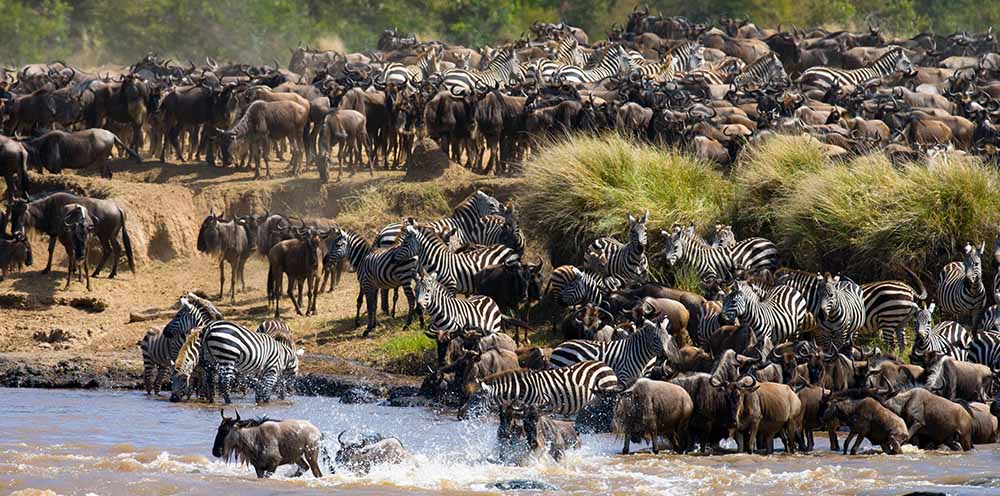
The Iconic River Crossings (July – October) – Great Wildebeest Migration Safaris
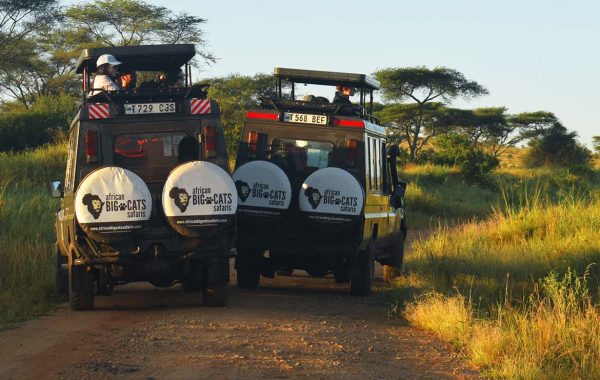
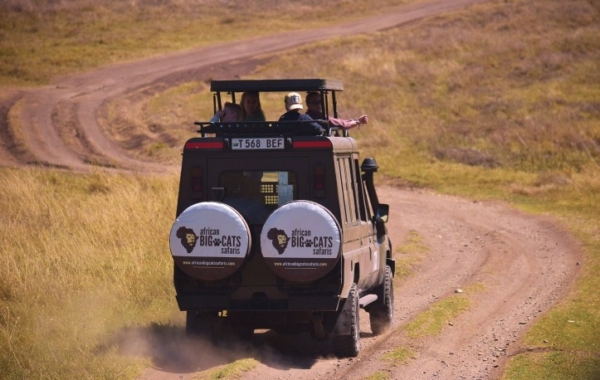
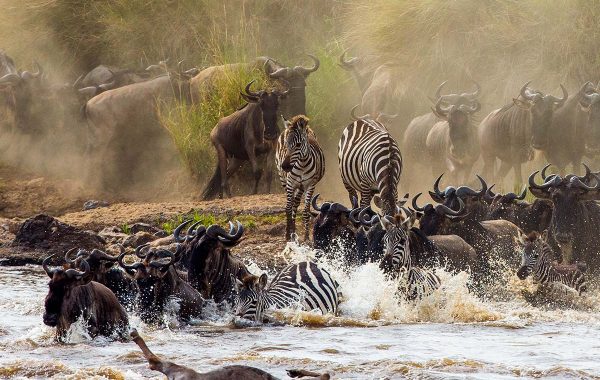
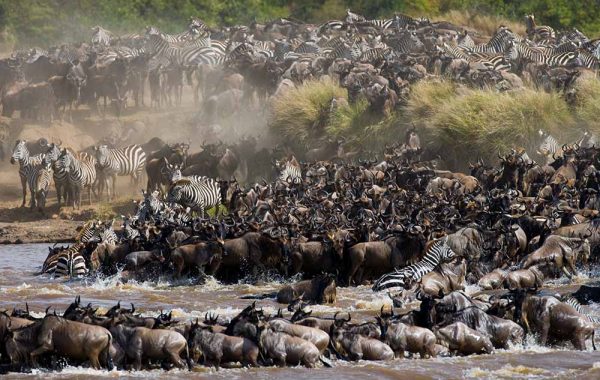
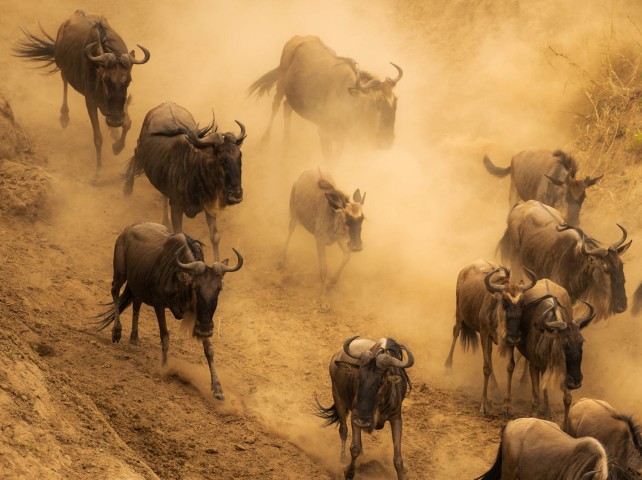
Perhaps the most famous stage of the migration occurs in the Northern Serengeti. The herds gather along the banks of the Mara River, hesitant to face the snapping jaws of Nile crocodiles. Suddenly, a single brave individual leaps into the water, triggering a chaotic and breathtaking stampede. Thousands of animals plunge through the currents while travelers watch from the safety of their safari vehicles. This period represents the peak of “high season” due to the high-stakes drama and incredible photography opportunities.
The Return Journey (November – December)
Once the short rains begin in the south, the survivors turn back. They move quickly through the eastern Serengeti to reach the southern plains once more. This rapid movement completes the cycle, ensuring the survival of the next generation.
Planning Your Great Wildebeest Migration Safaris
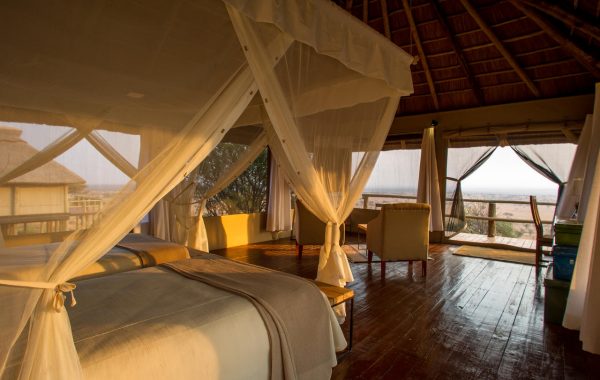
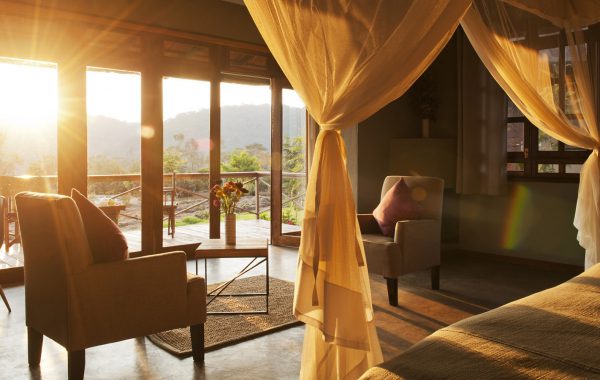
If you plan a migration safari, you must choose your camp location wisely. Since the herds move constantly, mobile tented camps offer the best advantage because they relocate seasonally to stay near the action. Additionally, you should book well in advance, as the most strategic lodges fill up quickly during the river crossing months. Ultimately, this journey provides more than just a vacation; it offers a front-row seat to the raw, unyielding rhythm of the natural world.